



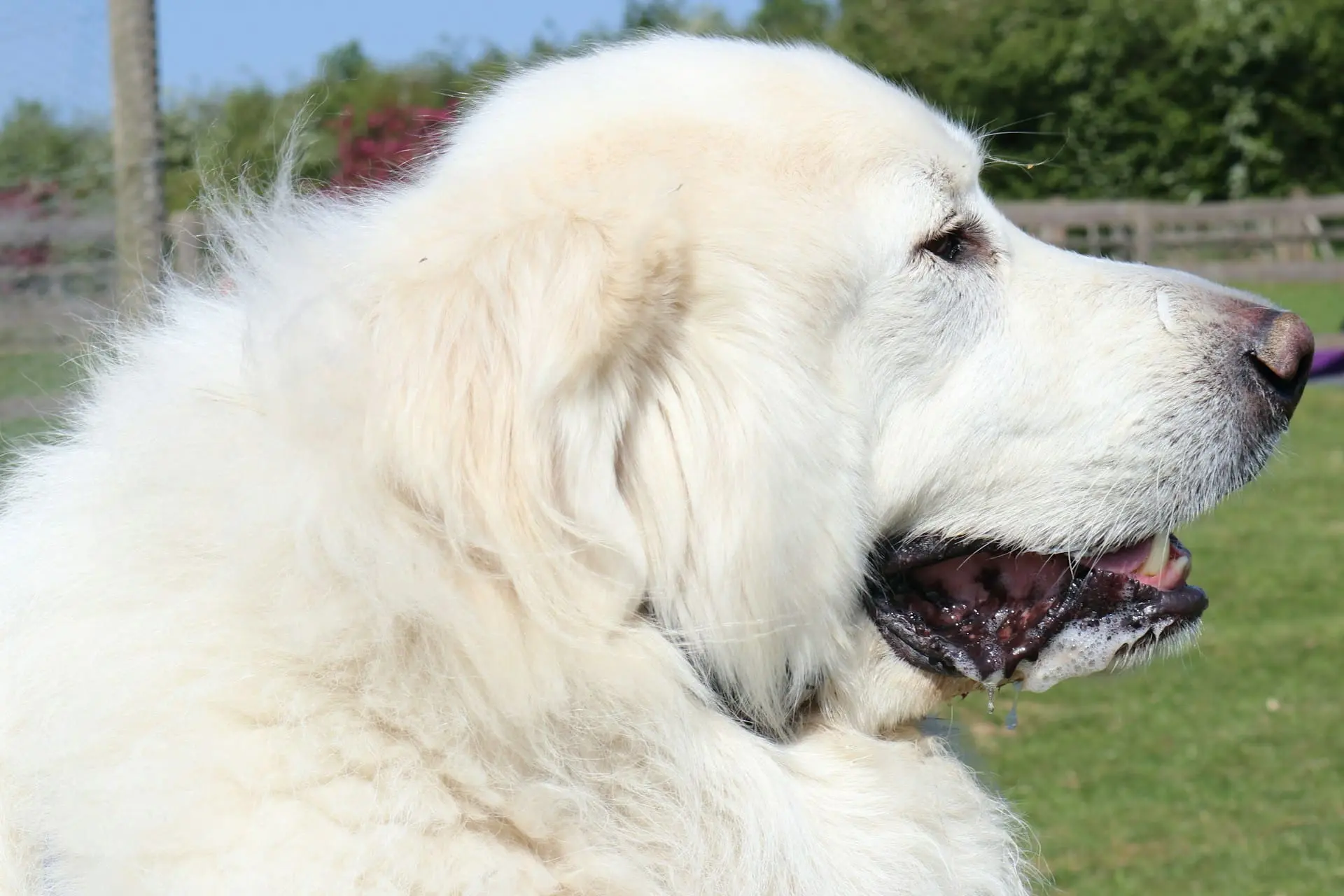
10 Sep Case Study-Beau: Dog Broken Tooth Extraction
Meet the Patient
Beau is a 6-year-old male neutered Great Pyrenees. He presented to Veterinary Dental Specialists in April of 2026 for an evaluation of fractured teeth.
Symptoms at Home
Last summer, Beau’s family began noticing that he had persistent bad breath, although he continued eating normally and acting like himself. More recently, they observed increasing redness and inflammation along his gumline, particularly on the left side of his mouth. Despite these changes, Beau never showed obvious signs of pain, and his appetite and behavior remained unchanged.
Dog Broken Tooth: Diagnostics and Examination Findings
During Beau’s initial oral examination by our board-certified Veterinary Dentist, we found that several of his teeth showed signs of wear. Both of his upper carnassial teeth (the large chewing teeth in the back of the mouth) were fractured, and the fractures had exposed the pulp, which is the sensitive inner portion of the tooth that contains nerves and blood vessels. We also noted inflammation of the gums (gingivitis) throughout his mouth, with the most severe inflammation surrounding the fractured tooth on the upper left side.

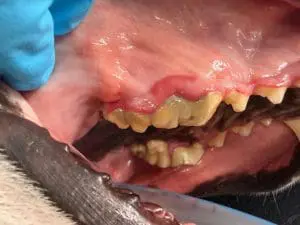
Once Beau was under general anesthesia, we were able to perform a much more thorough oral examination. An additional fractured molar was discovered on the lower right side. Fortunately, this fracture had not exposed the pulp, making it less painful and less likely to become infected. We also found a moderate amount of tartar buildup, and one of the upper left molars was loose, indicating loss of the supporting structures around the tooth.
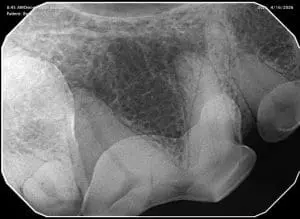
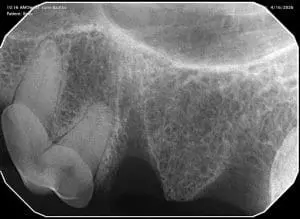
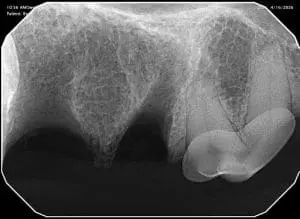
To evaluate the health of the teeth and jaw beneath the gumline, we performed full-mouth dental radiographs and a CT scan of Beau’s head. This advanced imaging revealed mild bone loss around several teeth and evidence of periodontal disease that could not be seen during the visual examination alone.

Dog Broken Tooth Treatment and Extraction
Beau received a complete professional dental cleaning, including scaling to remove plaque and tartar and polishing to smooth the surfaces of his teeth.
Extractions of the mobile tooth and the two fractured teeth were performed. The teeth were successfully extracted, and the extraction sites were sutured closed.
Recovery and Outcome
Following his procedure, Beau was sent home with an anti-inflammatory medication to help control pain and reduce inflammation. He was also placed on a soft-food diet for 10–14 days to allow the tooth extraction sites to heal.
To help maintain his remaining teeth and slow the progression of periodontal disease, Beau’s family was instructed to begin gently brushing his teeth 3–5 days after surgery, once his mouth had started to heal. The extraction sites healed well, and after recovery, Beau was able to return to his normal routine.
Key Takeaways
Fractured carnassial teeth are one of the most common painful dental injuries in dogs. When a fracture exposes the pulp (the living tissue inside the tooth that contains nerves and blood vessels), it can lead to significant pain, infection, and abscess formation. Because many dogs continue to eat and act normally despite oral pain, regular dental examinations are essential for identifying these injuries early and providing appropriate treatment.
If you suspect your dog may have a broken tooth or other dental problem, contact us for a comprehensive dental evaluation. We can identify concerns that may not be obvious at home and recommend appropriate treatment.
Photo by Bruce Williamson on Unsplash used with permission under the Creative Commons license for commercial use 09/10/2026
Author

Dr. Honzelka is a 1999 graduate of the University of Wisconsin School of Veterinary Medicine. After graduation he entered small animal practice. Although he enjoyed general practice, in 2006, he was “bitten by the dentistry bug”. He started attending as much dental CE and labs as possible. A few years later, Dr. Honzelka made the tough decision to leave general practice and enter a residency program in Dentistry and Oral Surgery. He became a Board-Certified Veterinary Dentist® in 2015. Dr. Honzelka is a Wisconsin native and worked at Animal Dentistry & Oral Surgery Specialists in the Milwaukee and Oshkosh area.
Publications:
Honzelka SR, Kressin DJ, Chamberlain TP. Modified Conservative Treatment of an Extensive Dentigerous Cyst in a Dog. J Vet Dent. 2014 Dec;31(4):249-254. doi: 10.1177/089875641403100405. PMID: 30870957.